
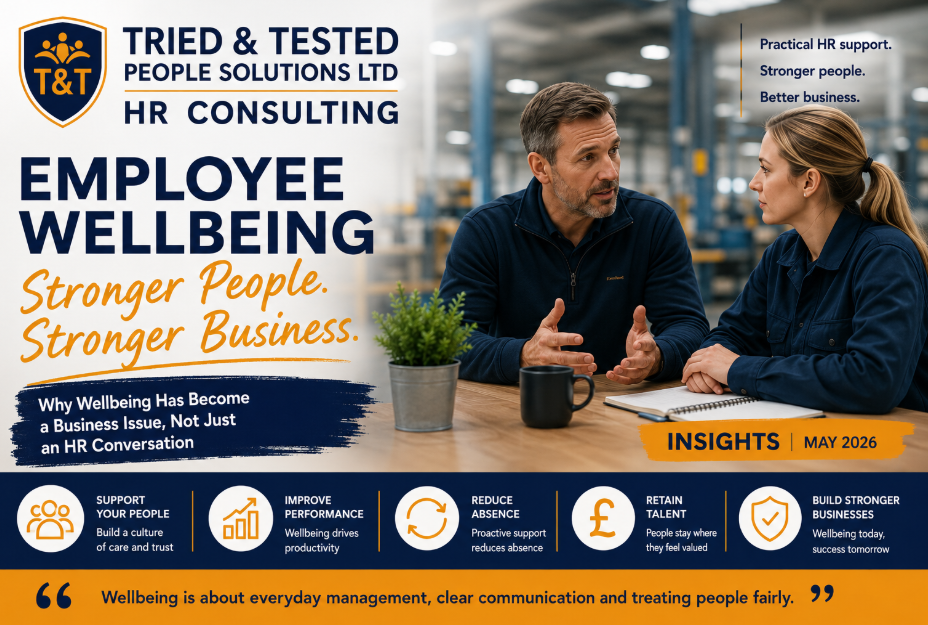
Why Wellbeing Has Become a Business Issue, Not Just an HR Conversation
Employee wellbeing is no longer viewed as a standalone initiative or a workplace nice to have.
For many businesses, it has become a critical operational issue that directly affects productivity, retention, absence levels, engagement and workplace culture.
Business leaders are continuing to navigate significant pressures. Economic uncertainty, rising operational costs, recruitment challenges and increased workloads are all having an impact on employees and managers alike.
In manufacturing and operational environments, these pressures can often feel even more visible due to staffing shortages, shift demands and the pace of day-to-day operations.
As a result, many businesses are seeing increased signs of stress, burnout, disengagement and fatigue across their workforce.
The challenge for employers is understanding how to respond appropriately, while still maintaining performance, accountability and operational stability.
Supporting employee wellbeing means creating a working environment where people feel supported, listened to and treated fairly, while ensuring managers have the confidence to handle people challenges consistently and professionally.
In practice, businesses that approach wellbeing proactively are better positioned to retain employees, reduce disruption and build stronger workplace cultures.
The Link Between Wellbeing and Business Performance
There is a growing recognition that employee wellbeing and business performance are closely connected.
When employees feel unsupported, overloaded or disconnected from leadership, the impact affects morale, absence levels, productivity and turnover. Communication breaks down and employee relations challenges increase. Managers can also come under pressure.
Line managers are expected to balance operational demands with people management responsibilities, often with limited training or support. When managers themselves are stretched, wellbeing concerns can be missed or addressed inconsistently. This can create wider cultural problems across teams.
Employees are far more likely to speak openly about concerns when leadership visibility is strong and communication feels genuine. Conversely, workplaces where employees feel ignored or undervalued usually experience lower engagement and growing frustration.
The most effective improvements come from everyday management practices, clear communication, reasonable workloads, supportive leadership and consistency in how employees are treated.
Small actions can make the greatest difference.
Consistency Matters
Inconsistency is one of the biggest risks businesses face.
Employees quickly notice when wellbeing concerns are handled differently between managers or departments. This can damage trust and lead to perceptions of unfairness, particularly during periods of pressure or organisational change.
One manager may respond supportively to workload concerns, while another may not act at all. Some employees may feel comfortable requesting flexibility or support, while others might fear negative consequences for speaking up. This inconsistency creates risk for both employee relations and workplace culture.
The Employment Rights Act and wider workplace protections continue to reinforce the importance of fairness, reasonable treatment and good people practices. Employers are increasingly expected to demonstrate appropriate management behaviours, clear communication and supportive workplace processes.
Businesses should also recognise that wellbeing conversations are becoming more closely linked to broader discussions around mental health, stress management, flexible working and workplace inclusion.
Managers do not need to become counsellors or medical experts, however, they do need the confidence to recognise concerns, hold supportive conversations and know when additional support or escalation may be required.
Leadership Visibility Still Matters
During periods of growth, change or operational pressure, employees look to leadership for reassurance and clarity. When communication reduces or leaders become less visible, uncertainty can grow quickly across teams.
This is particularly important during times of restructuring, increased workloads, operational change or periods of business uncertainty. Employees are more likely to remain engaged when leaders communicate honestly, manage expectations clearly and demonstrate empathy alongside accountability.
Wellbeing should not sit solely within HR. It should form part of wider leadership thinking around culture, performance, retention and operational resilience.
Businesses that treat wellbeing as a proactive management responsibility, rather than a reactive HR issue, are better equipped to maintain trust and stability during challenging periods.
Key Business Risks to Watch
- Increased absence levels linked to stress, burnout or disengagement
- Reduced productivity and concentration across operational teams
- Higher employee turnover and recruitment challenges
- Inconsistent management approaches damaging trust and morale
- Increased grievances or employee relations concerns linked to workload or management behaviour
- Manager burnout caused by prolonged operational pressure
Employment Law Watch
Employers are facing increasing expectations around workplace wellbeing, fairness and employee support.
The Employment Rights Act continues to reinforce the importance of fair treatment, reasonable management practices and appropriate workplace protections. Employers should also remain mindful of responsibilities linked to working hours, flexible working requests, workplace stress and employee wellbeing conversations.
Businesses do not need overly complex wellbeing strategies, but they should ensure managers understand:
- The importance of consistent communication
- When wellbeing concerns may require further support
- How to handle sensitive conversations appropriately
- Why documentation and follow-up matter
- The risks of ignoring ongoing workplace pressure or stress concerns
A practical, balanced and well-managed approach is often the most effective.
Practical Steps for Employers
Strengthen Manager Confidence
Provide managers with practical guidance on wellbeing conversations, communication and handling sensitive employee concerns appropriately.
Improve Leadership Visibility
Regular communication from leadership helps reduce uncertainty and strengthens trust during busy or challenging periods.
Review Workload Pressures
Monitor operational demands, overtime levels and team capacity to identify areas where pressure may be building.
Encourage Early Conversations
Create an environment where employees feel comfortable raising concerns before problems escalate.
Maintain Consistency
Ensure wellbeing support, communication and management approaches are applied fairly across teams and departments.
Document Key Discussions
Keep accurate records of wellbeing conversations, agreed actions and support measures to maintain clarity and consistency.
Three Questions for Business Leaders
- Do our managers have the confidence and capability to handle wellbeing concerns effectively?
- Are workload pressures and operational demands affecting employee engagement or team morale?
- Would employees describe our workplace culture as supportive, fair and consistent?
Useful Tip or Takeaway
Employee wellbeing is often shaped less by large initiatives and more by everyday management behaviours, communication and workplace culture.
“To find out more about Tried & Tested People Solutions Ltd, feel free to get in touch.”
0 Comments