
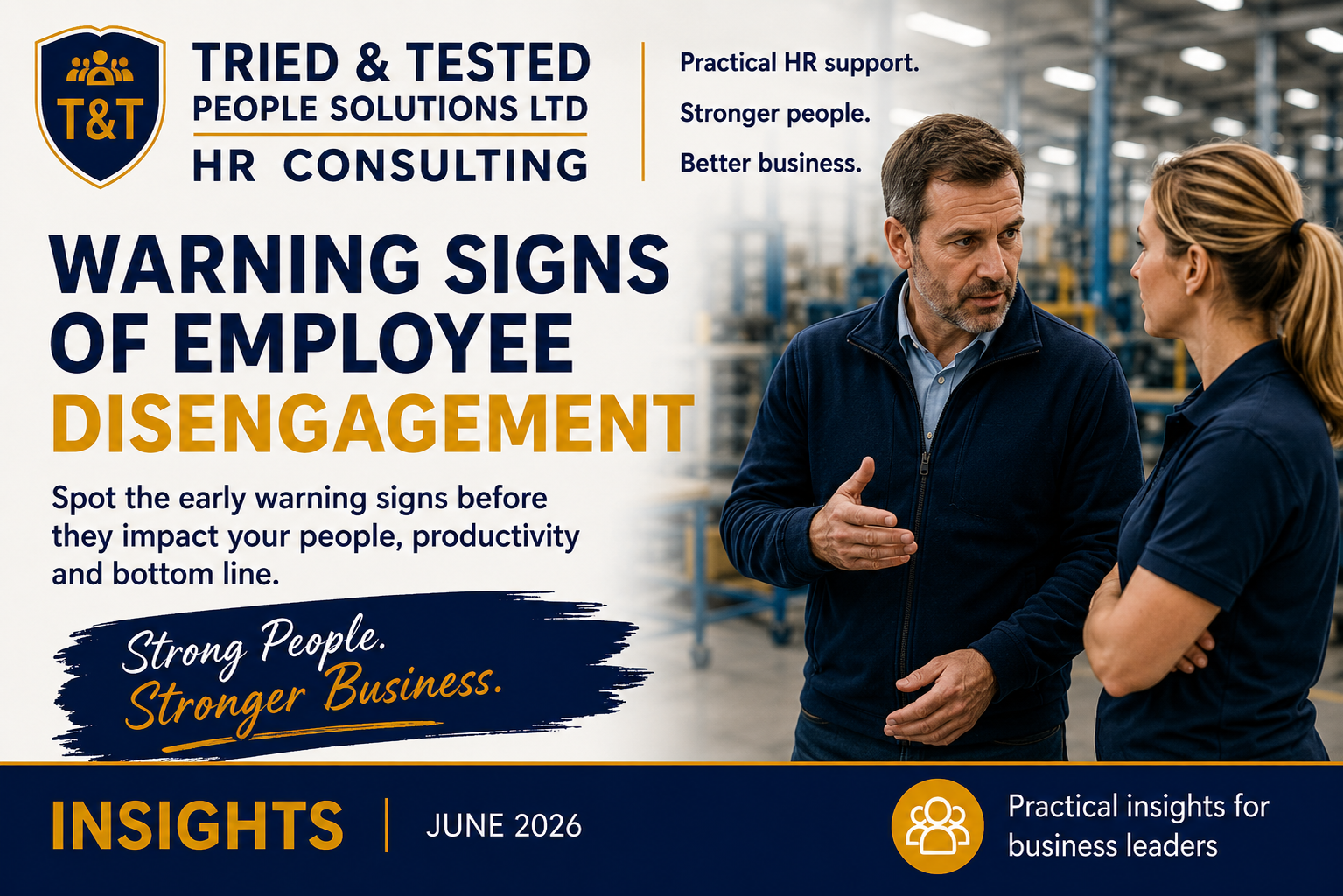
The Warning Signs of Employee Disengagement
Why Businesses Cannot Afford to Ignore Early People Signals
In most businesses, employee disengagement develops gradually through a combination of workplace pressure, poor communication, unclear leadership, inconsistent management or employees feeling undervalued over time.
For SME businesses, particularly within manufacturing and operational environments, disengagement can have a significant impact on performance and operational stability. Productivity may decline, communication can weaken and managers often find themselves dealing with increased frustration, reduced accountability and growing employee relations concerns.
The challenge is that disengagement is not always immediately obvious.
Employees do not always formally raise concerns before they mentally disconnect from the business. The warning signs can appear long before resignation letters, grievances or performance issues emerge.
Businesses that recognise and address these signs early are in a far stronger position to protect retention, morale and workplace culture.
Disengagement Usually Starts Quietly
One of the biggest misconceptions around employee disengagement is that it presents as poor behaviour or obvious negativity but in reality, it is often much quieter.
Employees who were previously proactive may become withdrawn or less communicative. Team members may stop contributing ideas, avoid involvement in wider discussions or show reduced enthusiasm for work they previously enjoyed.
Managers may also begin to notice increased lateness or absence , lower attention to detail, reduced accountability, less collaboration within teams, declining productivity or a noticeable shift in attitude or motivation.
In operational businesses, these changes can quickly affect wider team performance. Reduced engagement can impact quality, customer service, safety standards and overall workplace morale.
Importantly, disengagement is usually linked to the wider employee experience, not the role itself.
Poor communication, inconsistent management, unresolved conflict, unclear expectations or a lack of recognition can all contribute to employees becoming disconnected from the organisation. Periods of organisational change can also increase risk.
When businesses are experiencing growth, restructuring, staffing shortages or operational pressure, communication can become more reactive and managers may unintentionally overlook employee concerns. Over time, this can create frustration and uncertainty across teams.
The Role of Leadership and Management
Employees are significantly influenced by the behaviour they experience from managers and leadership teams.
Where managers communicate clearly, address concerns early and remain visible during challenging periods, employees are generally more likely to remain engaged and motivated.
However, where communication is inconsistent or leadership feels distant, disengagement can spread quickly and managers play a particularly important role.
A technically strong manager is not always a strong people manager. Some managers are promoted because of operational expertise, without receiving practical training in communication, employee relations or leadership capability.
This creates risk for businesses because managers who avoid difficult conversations, fail to provide feedback or apply inconsistent standards can unintentionally contribute to low morale and reduced trust within teams.
Good management practices make the greatest difference. Employees do not necessarily expect perfection, but they do expect fairness, consistency and honest communication.
Why Early Action Matters
Disengagement rarely improves on its own.
When concerns are ignored for too long, businesses may eventually experience increased turnover, formal grievances, higher absence levels or growing performance concerns.
The Employment Rights Act and wider workplace expectations continue to reinforce the importance of fair treatment, consistency and good people practices. Employees increasingly expect employers to communicate openly, manage concerns appropriately and provide supportive workplace environments.
While disengagement itself is not a legal issue, the way businesses respond to workplace concerns can quickly become one.
Poor handling of employee concerns, inconsistent management decisions or a failure to address workplace tensions fairly can create unnecessary employee relations and reputational risk.
Early intervention is usually far more effective than reactive management. Conversations, visible leadership and clearer communication can prevent larger issues from developing.
Workplace Culture As The Real Issue
In many businesses, disengagement is a symptom rather than the root cause. Employees who feel disconnected can be a reflection of wider cultural challenges within the organisation.
This may include lack of communication from leadership, poor management behaviours, excessive workload pressure, limited recognition or feedback, unclear expectations or inconsistent treatment across teams
Businesses that maintain strong workplace cultures tend to create environments where employees feel heard, supported and valued. This does not remove operational pressure, but it does help employees feel more connected to the business during difficult periods.
Culture is built through everyday management behaviours, not occasional initiatives. Small actions often have the greatest impact.
Key Business Risks to Watch
- Increased staff turnover and recruitment costs
- Reduced productivity and operational performance
- Lower team morale and workplace collaboration
- Increased absence linked to stress or disengagement
- Escalating employee relations concerns or grievances
- Damage to workplace culture and leadership credibility
Employment Law Watch
While employee disengagement itself is not a legal issue, the way businesses manage workplace concerns can create risk if handled poorly.
The Employment Rights Act continues to reinforce the importance of fairness, consistency and reasonable workplace practices. Businesses should ensure managers understand how to handle concerns appropriately, communicate professionally and apply policies consistently.
Particular attention should be given to:
- Fair treatment across teams and departments
- Appropriate handling of workplace concerns or complaints
- Consistent communication during periods of change
- Manager accountability and conduct
- Documentation of important conversations or actions
A proactive and people-focused approach helps reduce both operational and employee relations risk.
Practical Steps for Employers
Train Managers to Recognise Early Warning Signs
Support managers to identify behavioural changes, reduced engagement and workplace tension before issues escalate.
Improve Communication Across the Business
Employees are more likely to remain engaged when communication feels clear, honest and consistent.
Encourage Regular Conversations
Frequent one-to-ones and informal check-ins can help identify concerns early.
Review Workload and Operational Pressures
Monitor whether staffing levels, overtime or operational demands are affecting morale or wellbeing.
Increase Leadership Visibility
Visible leadership helps strengthen trust and reduces uncertainty during periods of pressure or change.
Maintain Consistency
Ensure policies, expectations and management behaviours are applied fairly across all teams.
Three Questions for Business Leaders
- Would our managers recognise the early signs of employee disengagement?
- Are operational pressures affecting communication, morale or workplace culture within our teams?
- Do employees feel listened to, supported and treated consistently across the business?
Useful Tip or Takeaway
Employee disengagement is often easier to prevent through early conversations and strong management than it is to repair once trust and motivation have been lost.
“To find out more about Tried & Tested People Solutions Ltd, feel free to get in touch.”
0 Comments