
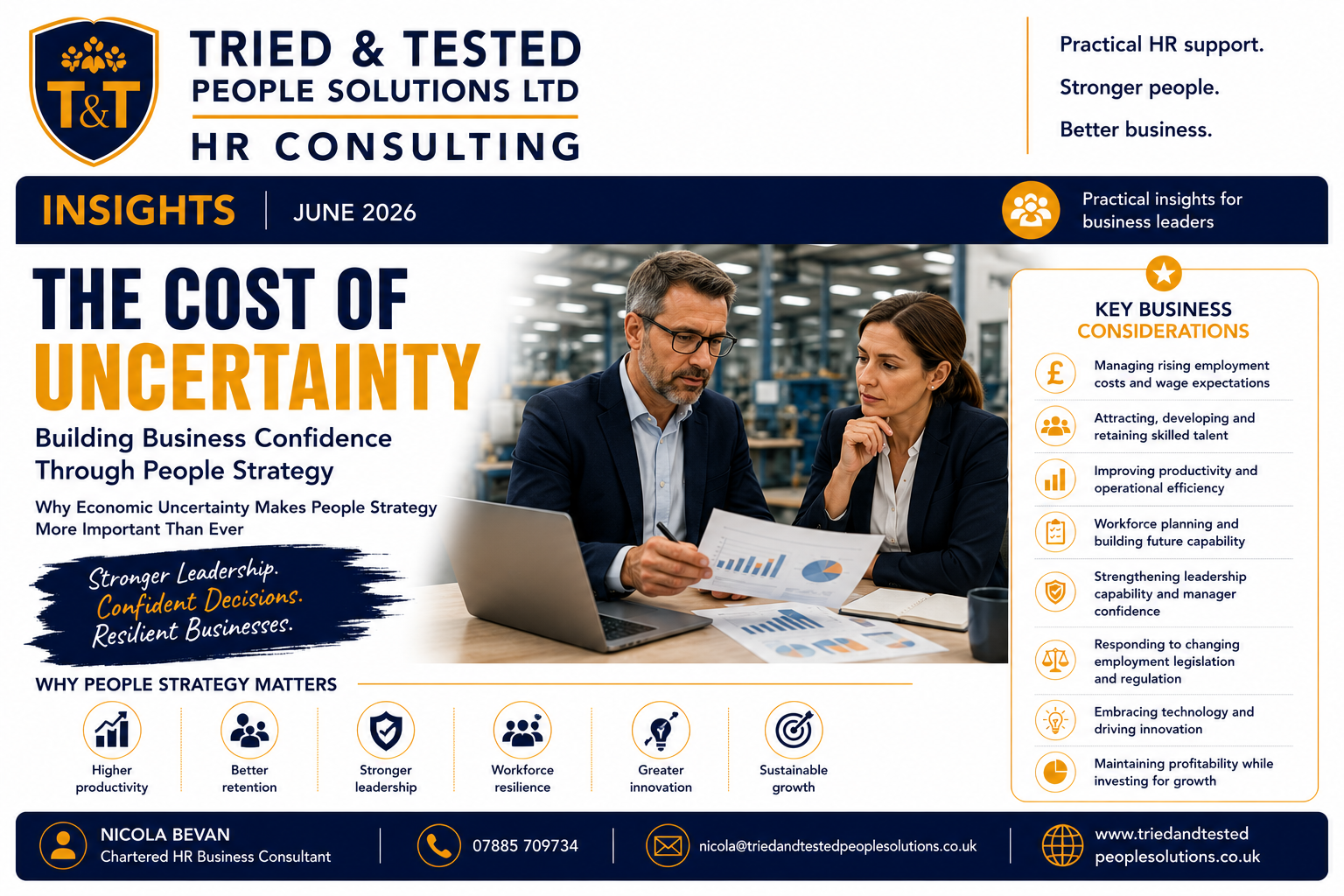
The Cost of Uncertainty
What Rising Inflation, Political Change and Workforce Strategy Mean for UK Manufacturers
The UK economy continues to present challenges for businesses. Although inflation has eased significantly from its peak, it has remained higher than many expected, with the latest figures showing inflation at 2.8%. At the same time, manufacturers continue to face increasing employment costs, ongoing skills shortages and continued pressure on margins.
Alongside these economic challenges, the political landscape is also evolving. Andy Burnham’s recent return to Westminster has generated significant discussion about the future direction of the Labour Party and the possibility of future leadership change. His focus on regional investment, skills development and support for manufacturing has renewed debate about how government policy could shape the UK’s industrial future.
While political and economic uncertainty is nothing new, it serves as a timely reminder that businesses cannot always control the environment in which they operate. What they can control is how they prepare, support their people and respond to change.
For manufacturing businesses in particular, a well-planned people strategy has never been more important.
Looking Beyond the Headlines
Economic headlines naturally attract attention, but successful businesses rarely make decisions based on headlines alone.
Periods of uncertainty encourage organisations to review their priorities, strengthen operational resilience and focus on the areas that have the greatest long-term impact.
For lots of manufacturers, that means asking important questions:
- Do we have the skills we need for future growth?
- Are our managers equipped to lead through change?
- Are we retaining our most experienced employees?
- Are we continuing to invest in capability while managing costs responsibly?
These are commercial questions as much as they are HR questions.
Organisations that continue to communicate openly, develop leadership capability and invest in their workforce are often better positioned to adapt, whatever the wider economic environment may bring.
What Could This Mean for UK Manufacturing?
If future government policy places greater emphasis on regional investment, skills development and manufacturing growth, businesses may benefit from:
- Increased investment in technical education and apprenticeships.
- Greater collaboration between employers, colleges and local authorities.
- Improved regional infrastructure.
- A continued focus on productivity and workforce capability.
At the same time, manufacturers are likely to continue facing familiar challenges:
- Managing employment costs.
- Recruiting and retaining skilled employees.
- Responding to changing employment legislation.
- Remaining competitive while investing for future growth.
Whatever political direction the country takes, organisations with engaged employees, capable managers and a clear workforce strategy will be better placed to respond confidently.
People are one of the greatest drivers of productivity, innovation and long-term resilience.
Practical Priorities for Business Leaders
- Continue communicating openly with employees about business priorities.
- Invest in developing managers to lead confidently through change.
- Review workforce planning alongside business planning.
- Focus on skills development and succession planning.
- Recognise employee contribution through meaningful engagement – not just pay.
- Build a workplace culture that encourages trust, collaboration and continuous improvement.
EMPLOYMENT LAW WATCH
Economic uncertainty does not reduce an employer’s legal responsibilities.
Whether organisations are restructuring, reviewing workforce requirements or adapting to changing market conditions, employment decisions should always be supported by fair procedures and appropriate documentation.
Employers should also continue monitoring developments in employment legislation. Political priorities may evolve over the coming months, particularly if changes in government leadership influence future employment policy. Staying informed and seeking professional advice before implementing significant workplace changes will help organisations manage risk while maintaining employee confidence.
Strong legal compliance and good people management work best together. They provide the foundation for making confident business decisions while protecting both the organisation and its employees.
Three Questions Every Business Leader Should Consider
- Does our workforce strategy support our long-term business objectives?
- Are our managers equipped to engage and develop their teams during periods of change?
- Are we creating a workplace where people feel informed, valued and motivated to contribute?
Useful Tip
Economic conditions will continue to change. Governments may change. Markets will fluctuate.
Businesses that remain focused on their people through clear communication, capable leadership and ongoing investment in skills are often better positioned to adapt, protect productivity and take advantage of future opportunities.
The most resilient organisations understand that their people strategy is an essential part of the business strategy.
0 Comments